Vestberry
Vestberry is a portfolio intelligence solution designed for venture capital funds to maximize portfolio value through actionable insights, comprehensive portfolio monitoring, and automated data management.
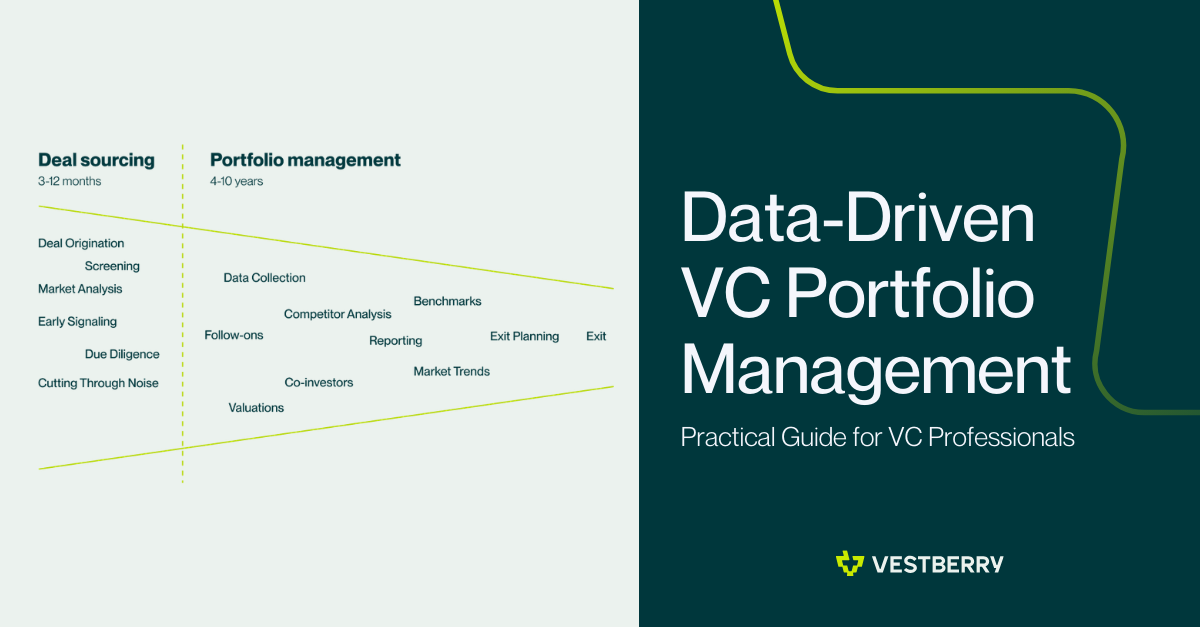
Most VC funds talk about being “data-driven,” but very few have a clear path for how their portfolio data should actually evolve over time. This 3‑tier view gives your team a simple way to see where you are today – and what it would take to move up.
Tier 1 is about getting your house in order. At this level, your main goal is to capture all the important portfolio data and put it into a Single Source of Truth instead of chasing spreadsheets across email, drives and tools.
That Single Source of Truth combines the basics: core financials, a concise set of KPIs, and essential qualitative inputs from founders and partners. The key is consistency – the same definitions, the same structure, the same cadence across portfolio companies. When you reach Tier 1, everyone in the firm looks at the same numbers when they make decisions, and you can answer fundamental questions about the portfolio without a firefight each time.
If it still takes several files and a few “last‑minute fixes” to prepare a portfolio view, you’re probably somewhere on the journey to Tier 1.
Read the full playbook for a data-driven VC portfolio management
Tier 2 is where data starts to actively shape how you run the portfolio. Instead of just storing information, you use it to monitor risk, benchmark performance and make reporting more predictable.
You track trends in a focused set of metrics, watch for deviations from plans, and surface early warning signs across the portfolio – not just company by company. You can see, for example, where runway is shortening faster than expected, where growth and efficiency are drifting apart, or where a company is falling behind relevant benchmarks. Reporting becomes faster and more consistent because it’s built on top of this live view, not rebuilt from scratch every quarter.
If you already have a central portfolio view that you bring into reviews and LP conversations – even if it’s not perfect yet – you’re on the path to Tier 2.
Read the full playbook for a data-driven VC portfolio management
Tier 3 adds an intelligent automation layer on top of the foundation and analytics you’ve already built. At this level, the system doesn’t just store and visualize data, it also helps you manage the portfolio.
Risk signals, patterns and anomalies can be surfaced automatically, based on the data you already collect. Instead of someone manually digging through metrics, the system flags issues, highlights outliers and suggests where attention or follow‑on capital might be most impactful. Reporting and recurring portfolio views become more “always‑on,” so the team can focus on decisions and founder support rather than assembly work.
Important to keep in mind, Tier 3 depends on the first two tiers. Without reliable data in one place and basic analytics in place, automation and AI will simply move noise around faster.
Read the full playbook for a data-driven VC portfolio management
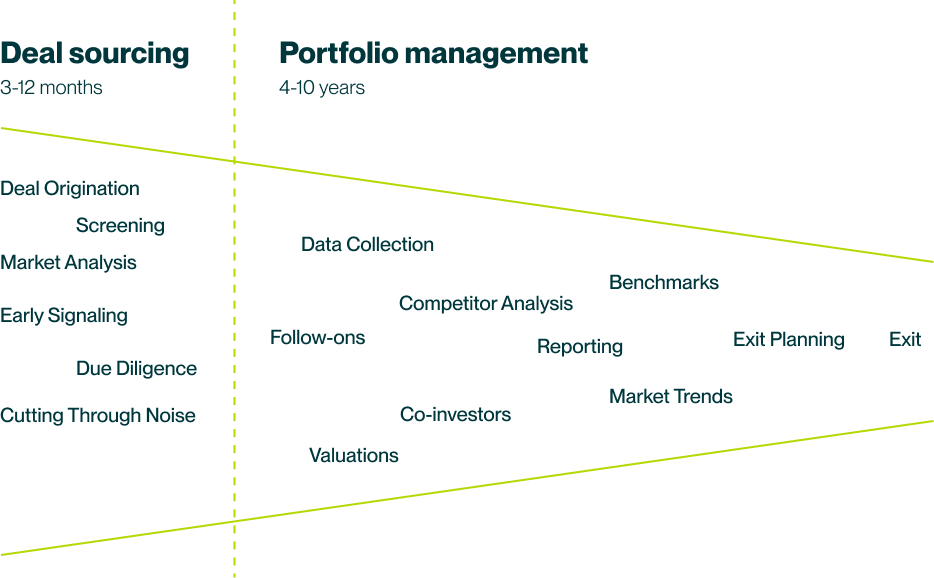
VCs typically hold their investments for 4–10 years, and most of the value is created – or lost – long after the initial check. At the same time, LPs increasingly expect evidence that portfolio management is structured, data‑informed and proactive, not just a set of ad‑hoc updates.
The 3 tiers give you a shared language for talking about portfolio data maturity inside your firm. They help you prioritize: first build a trustworthy foundation, then put it to work in analytics and reporting, then explore intelligent automation when the base is solid. For EU VC funds that want to move beyond gut feel and scattered files, this progression is often the difference between “we’re busy” and “we’re actually compounding an edge in the post‑investment phase.”
This article only sketches the three tiers at a high level. The full playbook for Data‑Driven VC Portfolio Management goes deeper into the portfolio data layers behind each tier, shows concrete examples of how funds work at different maturity levels, and includes a simple assessment you can use to align your team on where you are today.
Download the playbook to see the complete framework and practical steps for moving your fund up the maturity curve.

Vestberry is a portfolio intelligence solution designed for venture capital funds to maximize portfolio value through actionable insights, comprehensive portfolio monitoring, and automated data management.